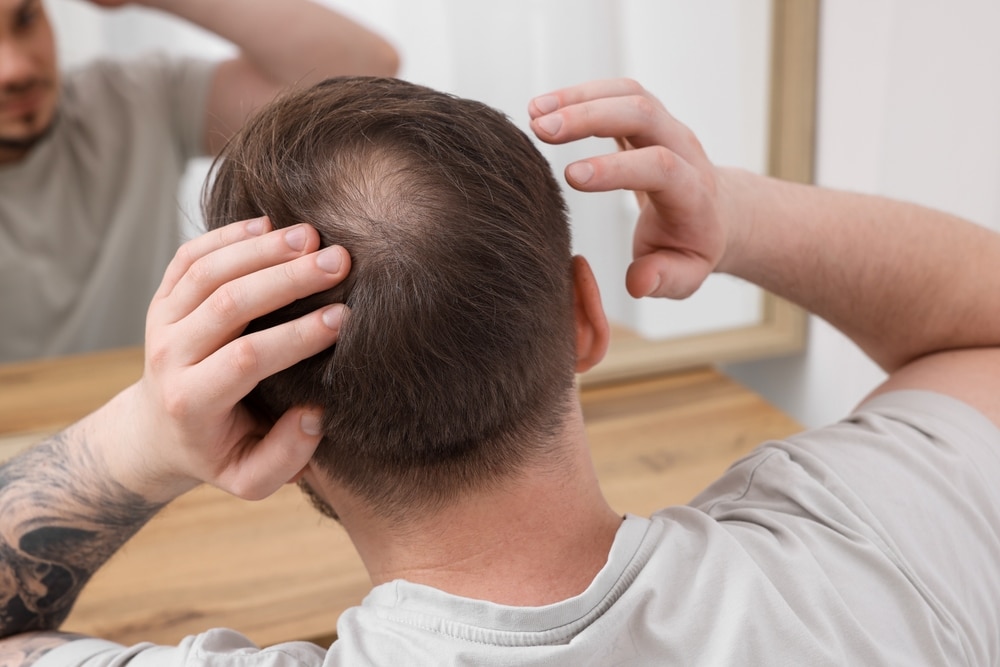














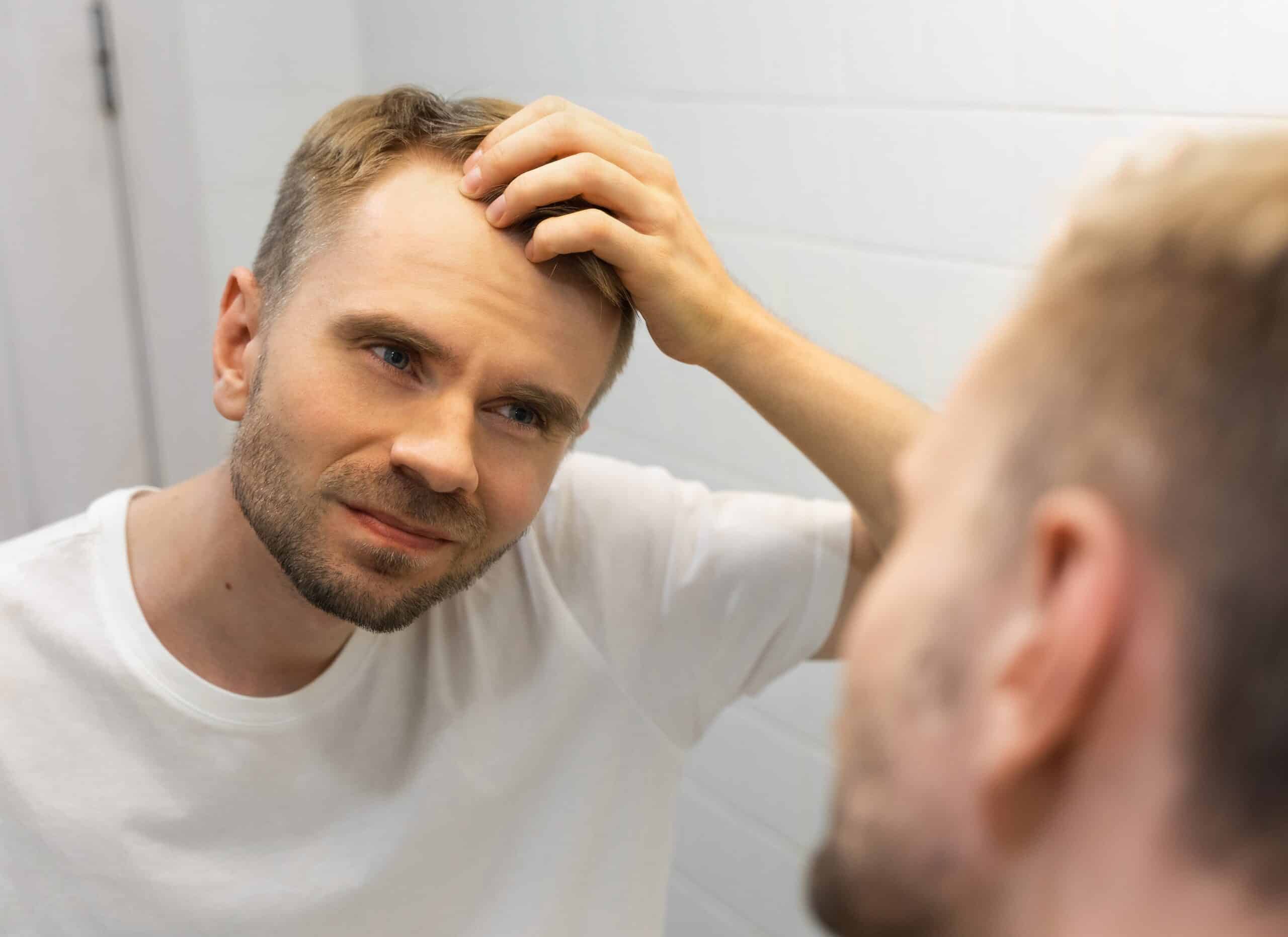
Hair loss is one of the most common concerns dermatologists see in both men and women. The most frequent cause is genetic hair loss, medically known as androgenetic alopecia. While many people think of it as a male problem, it affects both sexes, though it tends to appear differently.
In men, androgenetic alopecia typically presents as a receding hairline and thinning at the crown, often progressing to more extensive baldness over time. In women, the pattern is usually more subtle, with diffuse thinning along the top of the scalp while the frontal hairline remains intact. The condition is driven by a combination of genetics and hormones, particularly sensitivity of hair follicles to dihydrotestosterone (DHT). Over time, affected follicles shrink and produce progressively thinner, shorter hairs.
How Does Topical Minoxidil Help with Hair Loss?
The first medication approved to treat hair loss was topical minoxidil, widely known by the brand name Rogaine. Originally developed as a blood pressure medication, physicians noticed that patients taking it often experienced increased hair growth.
Researchers eventually developed a topical version, which became FDA-approved for hair loss in the late 1980s. Minoxidil works by prolonging the hair growth cycle and improving blood flow to hair follicles, helping them produce thicker hair. It is available over the counter and remains one of the most widely used treatments today for both men and women.
How Does Finasteride Help Treat Hair Loss?
Another major advancement came with the introduction of finasteride. Finasteride works by blocking the enzyme that converts testosterone to DHT, the hormone largely responsible for follicle miniaturization in androgenetic alopecia.
For many men, oral finasteride significantly slows hair loss and can even promote regrowth. Because it affects hormone metabolism, it has been associated with potential sexual side effects in a small percentage of patients.
In recent years, there has been significant discussion surrounding “post-finasteride syndrome,” a condition in which symptoms such as sexual dysfunction or mood changes were reported to persist after stopping the medication. However, more recent and larger studies have produced findings that challenge earlier assumptions, suggesting that persistent symptoms may be much rarer than initially believed and may not be causally linked in many cases.
Can Low Dose Oral Minoxidil Help With Hair Loss?
An exciting newer option gaining popularity is low-dose oral minoxidil, prescribed off label for hair loss. At much lower doses than those used for blood pressure treatment, oral minoxidil can stimulate hair growth by increasing blood flow and extending the growth phase of hair follicles.
Many patients respond very well, but a known side effect is increased hair growth in unwanted areas, particularly facial hair..
Does PRP Work for Hair Loss?
Another treatment rapidly gaining popularity is platelet-rich plasma (PRP) therapy. During this procedure, a small amount of the patient’s blood is processed to concentrate growth factors, which are then injected into the scalp to stimulate hair follicles.
It has become a frequently requested service at Potozkin + Ellis Dermatology & Aesthetics.
How Does PRP Treatment for Hair Work?
Another treatment rapidly gaining popularity is platelet rich plasma therapy, also known as PRP for hair loss. During this procedure, a small amount of the patient’s blood is processed to concentrate growth factors, which are then injected into the scalp to stimulate hair follicles.
Explore Hair Loss Treatment Options at Potozkin + Ellis Dermatology
Hair loss can be frustrating, but today’s dermatology offers more treatment options than ever before. From topical therapies and oral medications to regenerative treatments like PRP, many patients can slow hair loss and even regain fuller hair with the right approach.
If you’re tired of losing hair, the good news is that effective solutions are available—and the earlier treatment begins, the better the results tend to be.

Jerome Potozkin, MD, is a dual board certified dermatologist and Mohs surgeon and founder of PotozkinMD Skincare & Laser Center. A recognized expert in cosmetic and dermatologic surgery, he has been featured in The New York Times, NBC’s Today Show, and ABC’s 20/20, and has published research in multiple medical journals. He also teaches future dermatologists at UCSF and has held leadership roles with CalDerm and John Muir Medical Center.