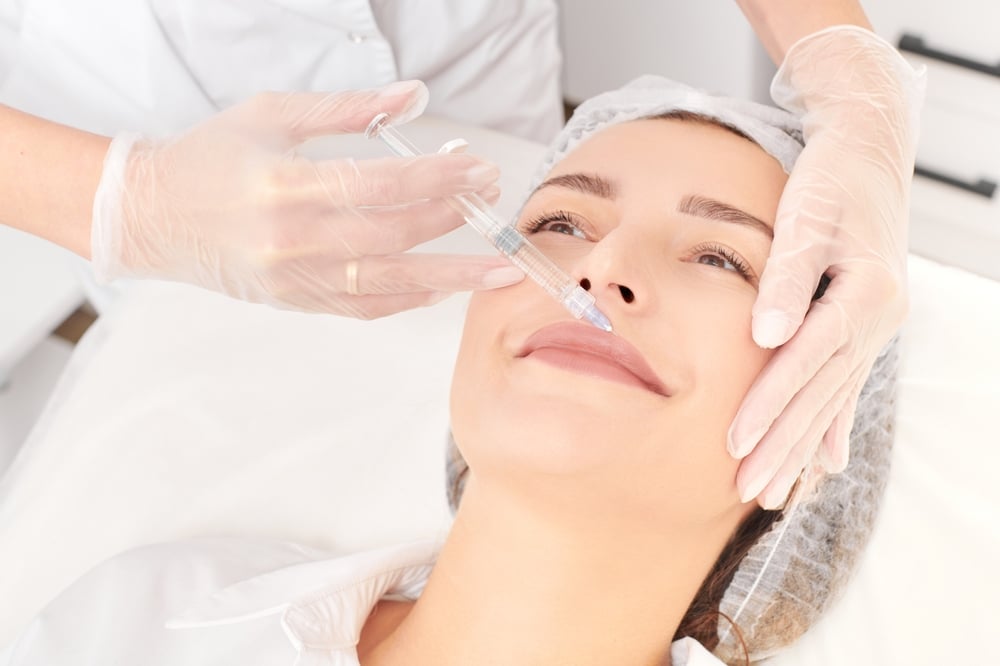















Facial volume loss can change the way your face looks long before deep wrinkles become the main concern. As natural collagen, fat support, and skin elasticity decline, the face may begin to look flatter, more tired, or less defined. For many patients, the goal is not to look different. It is to restore a fresher, healthier appearance without surgery.
At Potozkin + Ellis Dermatology & Aesthetics, non-surgical facial volume restoration can be achieved with advanced injectable treatments, such as Sculptra® and dermal fillers. These treatments can help address volume loss in the face, including cheek volume loss, hollowing, and softening of contours, while supporting a natural-looking rejuvenation.
What Is Facial Volume Loss?
Facial volume loss happens when the supportive structures beneath the skin gradually decrease, including collagen, elastin, fat, and bone density. As this support changes, the skin may appear loose, folds can become more visible, and certain areas of the face may look hollow or flat.
This process is a natural part of aging, but it can also be influenced by genetics, sun exposure, weight changes, stress, and lifestyle factors. While skincare can improve the skin’s surface, it cannot fully replace lost facial volume beneath the skin. That is why many patients choose injectable facial volume restoration when they want a more noticeable yet non-surgical improvement.
Common Signs of Volume Loss in the Face
Volume loss in the face often occurs gradually, so many people notice they look tired or older without immediately knowing why. The changes may begin in one area and then become more noticeable as facial support continues to decline.
Common signs of facial volume loss include:
- Flattened or hollow cheeks
- Deeper smile lines
- Hollow temples
- Shadows under the eyes
- Less definition along the jawline
- Marionette lines around the mouth
- A thinner or less lifted facial appearance
Cheek volume loss is especially common because the midface provides important support to the lower face. When the cheeks lose fullness, the face may look flatter, and folds around the nose and mouth can appear more pronounced.

How to Restore Facial Volume Without Surgery
Facial volume can be restored without surgery through injectable treatments that replace lost fullness, support facial contours, and encourage a refreshed appearance. The most common options include dermal fillers and Sculptra for facial volume loss.
Dermal fillers are often used when patients want more immediate improvement in specific areas, such as cheeks, under-eyes, lips, or folds. Sculptra works differently by helping stimulate collagen production over time, making it a strong option for gradual facial volume restoration.
The right approach depends on your anatomy, the amount of volume loss, your goals, and whether you prefer immediate enhancement, gradual improvement, or a combination of both. During a consultation at Potozkin + Ellis, our board-certified dermatologists can evaluate your facial structure and recommend a plan designed around your needs.
Sculptra for Facial Volume Loss
Sculptra is not a traditional dermal filler. It is a biostimulator that helps restore facial volume by encouraging the body to produce new collagen over time. Instead of simply adding immediate fullness beneath the skin, Sculptra gradually improves the underlying support that contributes to facial structure.
This makes Sculptra for facial volume loss a strong option for patients who want subtle, progressive improvement rather than an instantly filled look. It is often used to address broader areas of volume loss in the face, including the cheeks, temples, and lower face. Because collagen rebuilding takes time, results typically develop gradually after treatment and may continue to improve over several weeks or months.
Sculptra may be recommended for patients who notice overall facial thinning, hollowing, or a less supported appearance. Additionally, it can be especially appealing for people who want natural-looking facial volume restoration without appearing overfilled.
Fillers for Volume Loss
Dermal fillers can restore facial volume by adding support beneath the skin in areas where fullness has decreased. Unlike Sculptra, many fillers provide visible improvement soon after treatment, which makes them ideal for patients looking to address targeted concerns.
Fillers for volume loss are commonly used in the cheeks, nasolabial folds, under-eye area, lips, chin, and jawline. For cheek volume loss, fillers can help restore midface support and improve facial contour. In other areas, fillers can soften lines, reduce hollowing, and enhance definition.
Product selection and placement are essential. A skilled injector understands that the goal is not simply to add volume everywhere. Instead, the focus should be on placing the right amount of product in the right location to create a refreshed, balanced, and natural-looking result.
Sculptra vs Fillers for Facial Volume Restoration
Sculptra and fillers can both support facial volume restoration, but they work in different ways. Additionally, Sculptra helps stimulate collagen production, while fillers physically replace volume in specific areas.
Sculptra is often a strong choice for patients with broader facial volume loss who want gradual improvement. It works well when the concern is overall thinning or loss of support. Fillers may be better for patients who want immediate correction in defined areas, such as the cheeks, folds, lips, or under eyes.
In many cases, patients benefit from a combination approach. Sculptra can improve deeper collagen support, while fillers can refine specific contours. This allows treatment to address both overall volume loss and targeted facial concerns.
Treating Cheek Volume Loss Without a Facelift
Cheek volume loss can often be improved with Sculptra, dermal fillers, or a combination of both. Since the cheeks play an important role in supporting the midface, restoring volume in this area can make the face look fresher and more lifted without surgery.
When cheek volume decreases, the face may appear flatter, and folds around the mouth may become more visible. Rebuilding support in the cheek area can help soften these changes and improve overall contour.
However, cheek treatment requires a careful approach. Too much volume can create an unnatural appearance, while too little may not provide enough support. At Potozkin + Ellis, treatment planning focuses on enhancing the patient’s existing features while avoiding an overfilled look.
Who Is a Good Candidate for Non-Surgical Facial Volume Restoration?
Good candidates are often people who notice hollowing, flattening, cheek volume loss, or reduced facial fullness and want improvement without surgery. Patients may also be bothered by deeper folds, shadows, or a tired appearance resulting from facial volume loss.
Non-surgical facial volume restoration may be appropriate for patients with mild to moderate volume loss, realistic expectations, and an interest in injectable treatment options. Some patients prefer fillers for more immediate improvement, while others choose Sculptra for gradual collagen stimulation.
A consultation is the best way to determine which option fits your goals. Our board-certified dermatologists can assess your facial volume, skin quality, and areas of concern before recommending the most appropriate treatment plan.
Why Choose Potozkin + Ellis for Facial Volume Restoration?
Facial volume restoration requires more than choosing a filler. It requires experience, anatomical knowledge, aesthetic judgment, and a clear understanding of how aging affects the entire face.
At Potozkin + Ellis Dermatology & Aesthetics, the team takes a thoughtful approach to facial rejuvenation, focusing on natural-looking improvement rather than exaggerated change.
Whether you are concerned about cheek volume loss, hollowing, or overall facial volume loss, our dermatologists can help you understand your options and create a treatment plan that supports your goals.
Restore Facial Volume Without Surgery at Potozkin + Ellis
If facial volume loss has made your face look tired, hollow, or less defined, non-surgical treatment may help restore a refreshed appearance. With options such as Sculptra for facial volume loss and dermal fillers, patients can improve facial volume without surgery, incisions, or extensive downtime.
At Potozkin + Ellis Dermatology & Aesthetics, facial volume restoration is designed to help patients look refreshed while still looking like themselves
Request an appointment to learn how to restore facial volume with an injectable treatment plan that fits your needs.

Samantha Ellis, MD, is a board-certified medical and cosmetic dermatologist known for her expertise in aesthetic dermatology and natural-looking results. She has published peer reviewed research, contributed to medical textbooks, and serves as a Clinical Instructor of Dermatology at UC Davis. Dr. Ellis is also a widely followed dermatology educator on Instagram and YouTube and has been featured in Prevention, Cosmopolitan, Women’s Health, and Harper’s Bazaar.