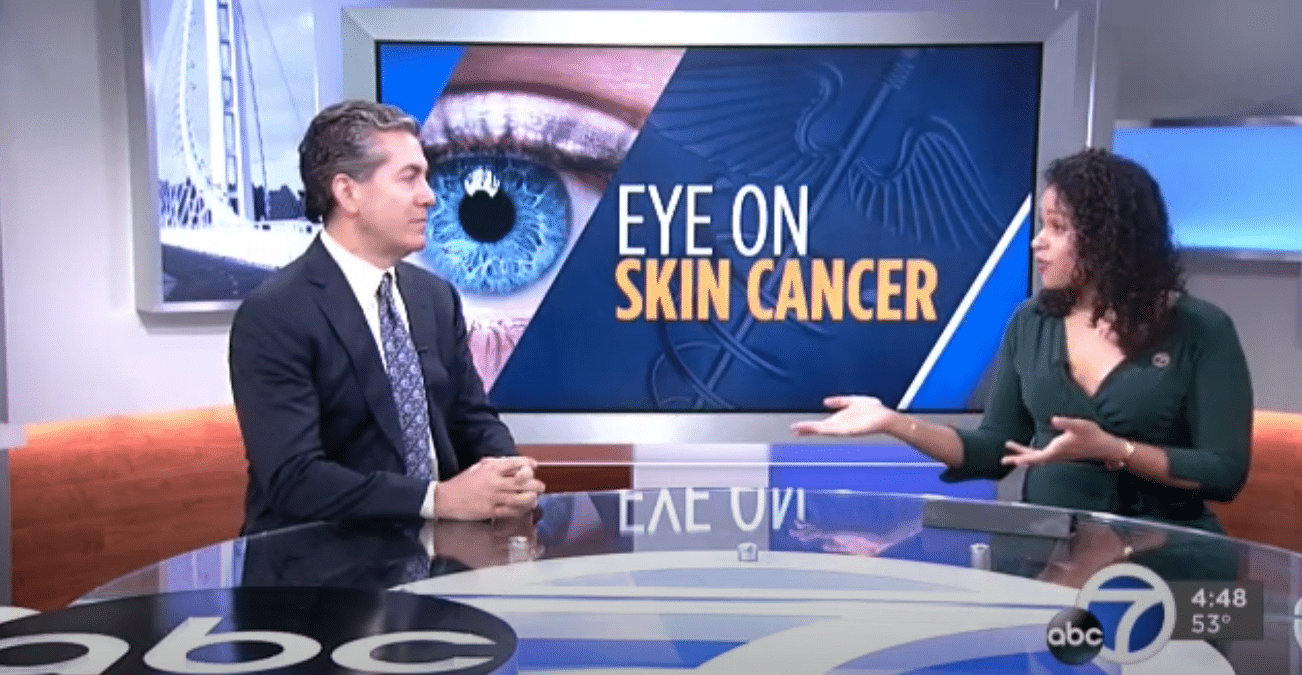















May is Skin Cancer Awareness Month, a time dedicated to educating the public about the most common forms of cancer in the United States and the importance of prevention and early detection. Skin cancer affects millions of Americans each year, but when caught early, it is often highly treatable if not curable.
The most common cause of skin cancer is exposure to ultraviolet (UV) radiation. UV rays come primarily from the sun but are also emitted by tanning beds. Over time, UV radiation damages the DNA in skin cells, leading to mutations that can cause uncontrolled cell growth and cancer. Repeated sunburns, especially during childhood, significantly increase the risk. Other factors that contribute to skin cancer include fair skin, a history of excessive sun exposure, use of tanning beds, a weakened immune system, and a family or personal history of skin cancer.
There are several types of skin cancer, including basal cell carcinoma, squamous cell carcinoma, and melanoma. While basal and squamous cell carcinomas are the most common and generally less aggressive, melanoma is the most dangerous form. Melanoma has the potential to spread to other parts of the body if it is not detected and treated early. Fortunately, when melanoma is caught in its earliest stages, the cure rate is extremely high.
How to Identify Early Signs of Melanoma with the ABCDE Rule
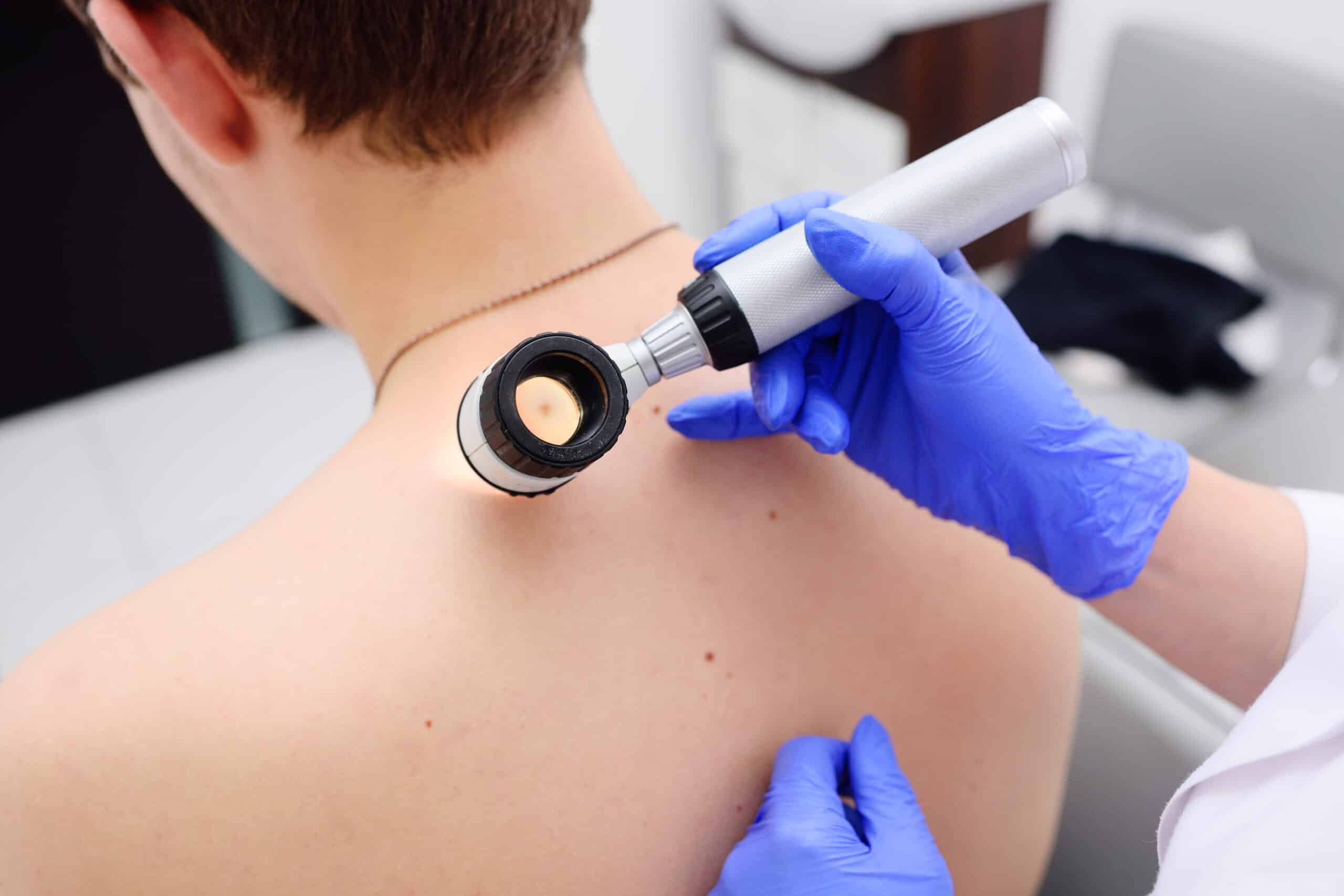
The ABCDE rule helps identify possible warning signs of melanoma by evaluating changes in a mole or skin lesion. Patients should regularly check their skin for spots that appear asymmetrical, have irregular borders, contain multiple colors, measure larger than 6 millimeters, or continue evolving in size, shape, color, or texture.
Recognizing these changes early and scheduling a skin evaluation with a dermatologist can improve the chances of detecting melanoma in its earliest stages.
- A – Asymmetry: One half of a mole does not match the other half.
- B – Border: The edges are irregular, ragged, or poorly defined.
- C – Color: The color is not uniform and may include shades of brown, black, red, white, or blue.
- D – Diameter: The spot is larger than about 6 millimeters (roughly the size of a pencil eraser), although melanomas can sometimes be smaller.
- E – Evolving: The mole is changing in size, shape, color, or symptoms such as itching or bleeding.
If you notice any of these warning signs, it is important to have the spot evaluated by a dermatologist.
Treatment for melanoma depends largely on how early it is detected. When melanoma is diagnosed in its earliest stage and confined to the skin, treatment is typically surgical removal. In many cases, a simple outpatient procedure to remove the cancer and a margin of surrounding tissue is curative.
For more advanced melanoma that has spread beyond the skin, treatment options have improved dramatically over the past decade. Modern immunotherapy medications work by stimulating the body’s immune system to recognize and attack cancer cells. These therapies have significantly improved survival for patients with advanced melanoma and have transformed what was once a very difficult disease to treat.
The key message of Skin Cancer Awareness Month is simple: protect your skin and check it regularly. Using sunscreen, wearing protective clothing, avoiding tanning beds, and seeing a dermatologist for routine skin exams can make a lifesaving difference. Early detection truly saves lives.
Prioritize Skin Cancer Prevention and Early Detection
Protecting your skin starts with awareness, prevention, and regular skin evaluations. Whether you are monitoring a changing mole or scheduling a routine skin cancer screening, early action can play an important role in detecting melanoma before it progresses.
At Potozkin & Ellis Dermatology, patients receive comprehensive dermatologic care focused on skin health, skin cancer prevention, and early diagnosis.
If you have noticed suspicious changes in your skin or would like to schedule a professional skin exam.
Contact us today to learn more about melanoma screenings and personalized dermatology care.

Jerome Potozkin, MD, is a dual board certified dermatologist and Mohs surgeon and founder of PotozkinMD Skincare & Laser Center. A recognized expert in cosmetic and dermatologic surgery, he has been featured in The New York Times, NBC’s Today Show, and ABC’s 20/20, and has published research in multiple medical journals. He also teaches future dermatologists at UCSF and has held leadership roles with CalDerm and John Muir Medical Center.